Chapter 12 : From Concept to Operation
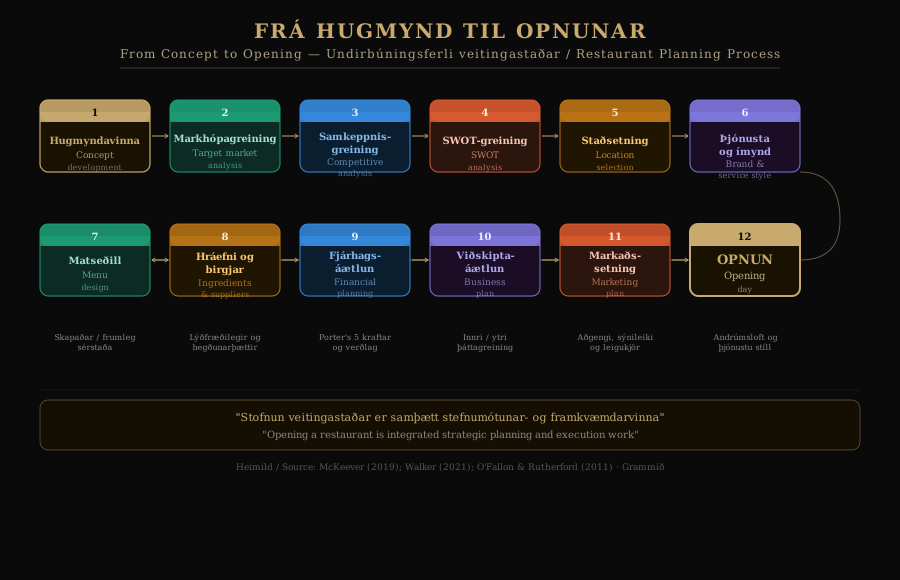
The process of turning a menu plan and a restaurant concept into an actual foodservice operation begins with purposeful concept development. At this stage, creativity, professional vision, and market opportunity must be brought together in a structured way. It is not enough for an idea to be original or exciting; it must also be feasible, understandable to the market, and operationally sustainable. This early work involves defining clearly what the restaurant is meant to represent, what kind of experience it intends to create, and how it will differentiate itself from competitors. Such distinctiveness may be based on cuisine, ingredient philosophy, pricing, service style, location, or a deliberate combination of these factors. In that sense, a successful restaurant concept is built not only on inspiration, but on a clear and workable strategic position (McKeever, 2019; Walker, 2021).
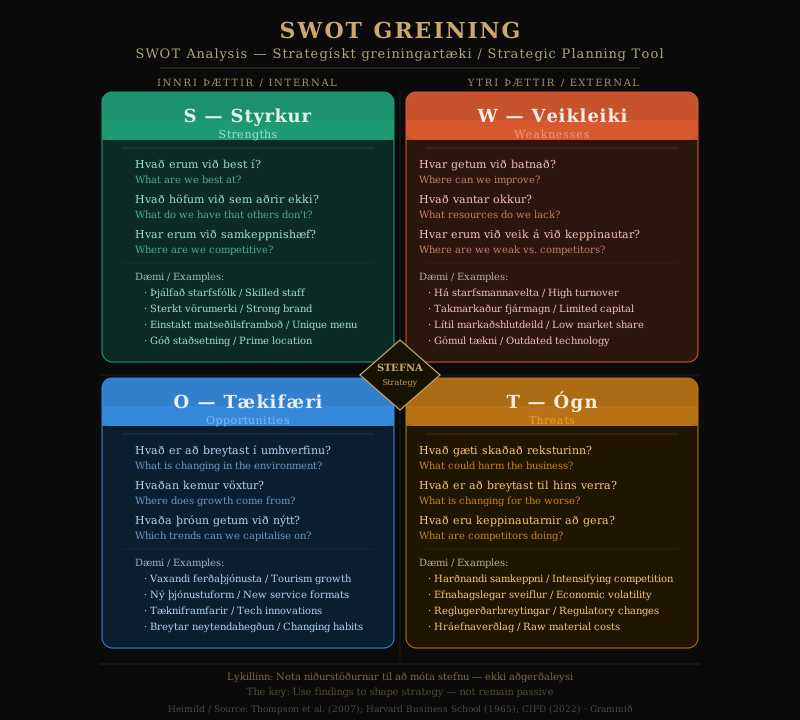
During this preparatory phase, it is useful to rely on analytical tools such as SWOT analysis, in which internal strengths and weaknesses are mapped alongside external opportunities and threats. This kind of analysis helps operators assess at an early stage which assumptions are strong and where the greatest risks may lie. By placing the concept in relation to actual market conditions, it becomes easier to determine whether it is likely to withstand competition, costs, and guest expectations. Business planning in hospitality is built precisely on this kind of critical review, where the concept is not simply described, but tested against market realities, operating conditions, and financial viability (McKeever, 2019).
The target market and guest needs
Once the core concept has been defined, the next step is targeting market analysis. This involves understanding who the likely customers are, how they behave as consumers, and which values most strongly influence their decisions. The analysis must consider not only demographic variables, such as age, income, and household characteristics, but also behavioural factors, including dining habits, expectations regarding price, service, speed, quality, and overall experience. It must also consider how people search for information, book tables, order food, and evaluate their experience afterwards. In contemporary restaurant operations, digital accessibility has become part of the basic service infrastructure, which means that social media, search visibility, review platforms, and online ordering systems must be treated as active components of the business model (Walker, 2021).
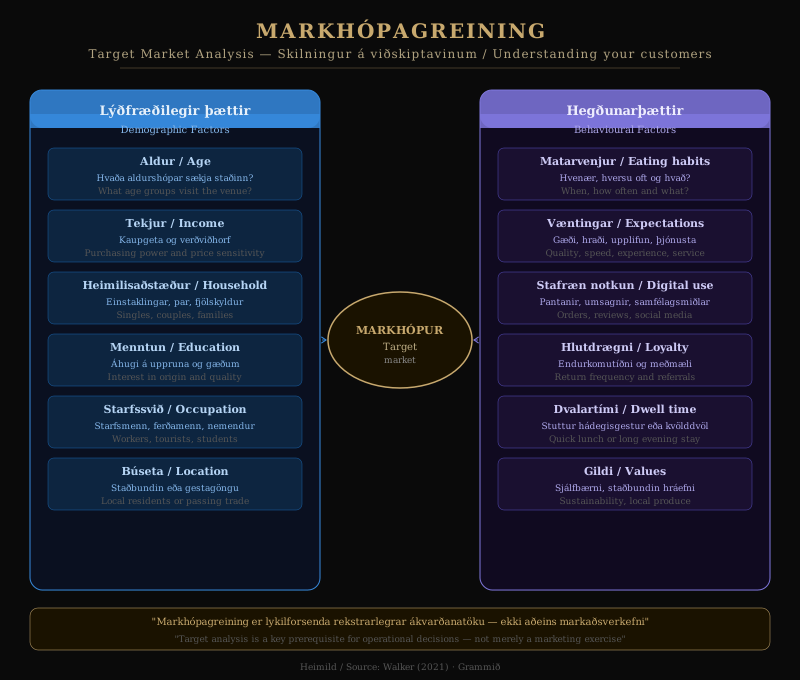
Target market analysis has direct implications for nearly every major operating decision. A restaurant that caters primarily to lunchtime customers seeking quick service requires a different layout, pricing structure, and production rhythm than a restaurant built around evening dining and longer guest stays. Similarly, a target market that values experience, local identity, or sustainability may call for a different presentation and ingredient strategy than one that prioritises convenience and price. For that reason, target market analysis should not be viewed merely as a marketing exercise, but as a central element of operational decision-making.
Competitive analysis and feasibility assessment
Before committing to premises, equipment, and capital investment, a realistic feasibility study must be carried out. Such an assessment addresses both market feasibility and financial feasibility. The market dimension concerns the size of the market, the competitive landscape, expected guest volume, and the behaviour of the target segment. The financial dimension focuses on start-up costs, operating expenses, revenue assumptions, and the level of sales required for the operation to become sustainable. Guidance on restaurant start-up planning consistently emphasises that these assessments should be completed before opening, as many operational decisions become expensive or difficult to reverse once the business is already in motion.
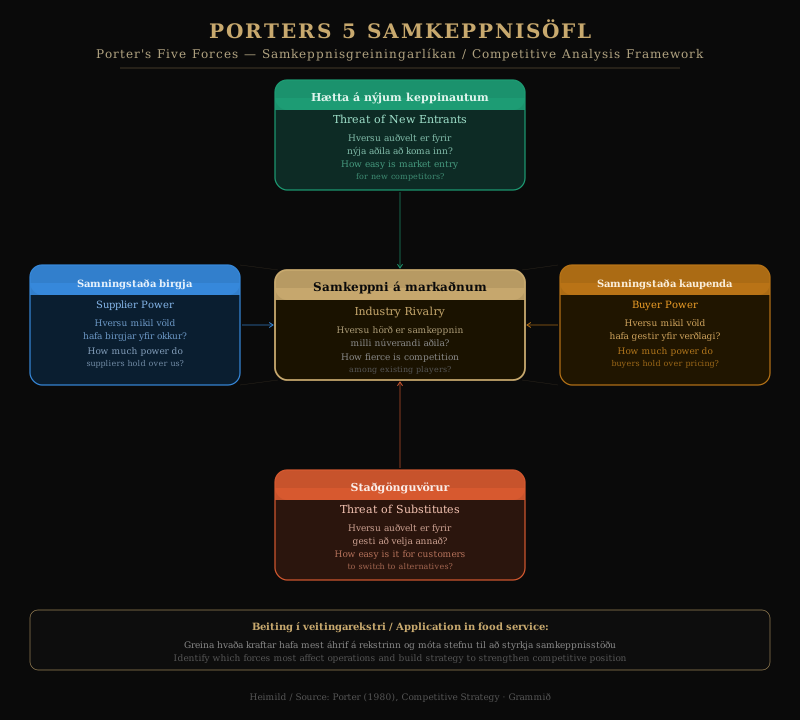
Competitive analysis must also go beyond simply identifying nearby establishments. It should include pricing, product range, menu structure, service level, atmosphere, visibility, and the image competitors have established in the market. By applying Porter’s model of competitive forces, operators can better understand the pressures shaping their environment, including rivalry among existing firms, the threat of new entrants, the bargaining power of suppliers, the bargaining power of customers, and the effect of substitute products or services. This analysis makes it possible to identify where a genuine competitive advantage may lie and which aspects of the concept must be particularly well developed if the restaurant is to gain traction in the market (Porter, 1980).
Location and accessibility
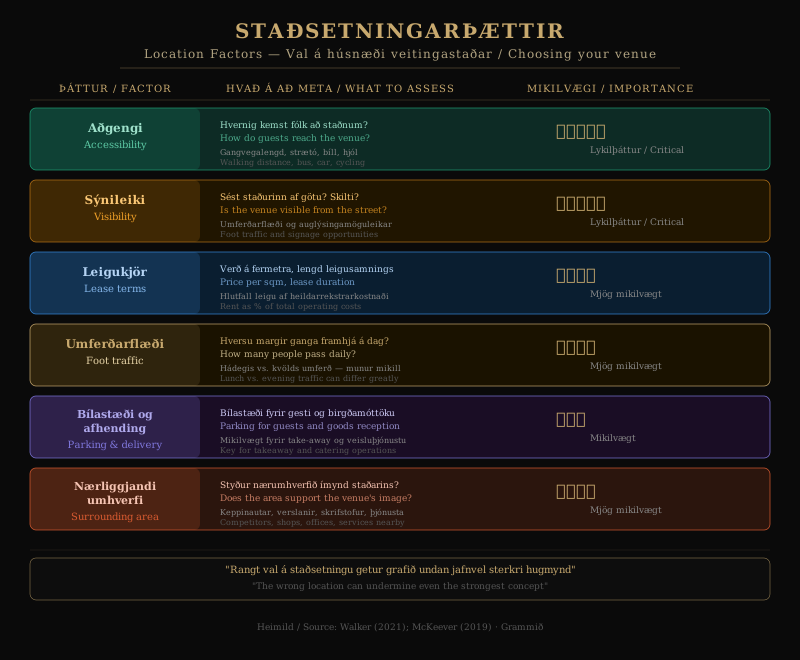
Site selection is one of the most important strategic decisions in the creation of a restaurant. Location affects accessibility, visibility, rental costs, customer flow, delivery logistics, staffing needs, and competitive position. When evaluating premises, operators must consider more than size and lease terms. They also need to assess how the site relates to traffic patterns, ease of access, parking, delivery arrangements, and whether the surrounding environment supports or weakens the image of the business. Research on restaurant operations has shown that location-related factors can have a substantial influence on financial performance and the long-term survival of firms in the sector.
Location must also align with both service style and target market. A fine dining restaurant built around a calm evening experience requires a different setting and spatial arrangement than a lunch-driven concept that depends on rapid table turnover. The physical space must support efficient flow between the kitchen, service area, and guests, while also reflecting the type of experience the restaurant aims to deliver. A poor location choice can therefore undermine even a strong concept, whereas an appropriate site can strengthen both operational performance and brand identity.
Service style, image, and guest experience
Once the location and target market have been identified, the restaurant’s service style and positioning must be defined clearly. This concerns how the establishment presents itself to the guest as a whole: whether it is formal or informal, fast-paced or leisurely, simple or highly experience-driven. The restaurant’s name, visual identity, interior design, lighting, music, table settings, staff uniforms, and communication style all shape guest perceptions and expectations. These elements must be aligned with the menu, pricing, and quality level if the overall concept is to appear coherent and credible.
Research on restaurant atmospherics shows that environmental factors such as lighting, acoustics, spatial layout, and general ambience can influence guest decision-making, emotional response, satisfaction, and willingness to return. This underlines the fact that service is not limited to food delivery and interpersonal interaction; it is also embedded in the environment in which the guest spends time. In hospitality education, it is therefore important to emphasise that the guest experience is composed of multiple interconnected factors that must work together (Ariffin, Bibon, & Abdullah, 2017).
The menu as a management tool
The menu is one of the most important management tools in restaurant operations. It links the restaurant’s concept, the production capacity of the kitchen, its ingredient strategy, pricing structure, contribution margin, and guest expectations. A well-designed menu must be attractive from the customer’s perspective while also being practical and sustainable in day-to-day operations. This means that dishes must match the capabilities of the kitchen in terms of workflow, equipment, staffing, and inventory control. If the menu is overly complex or poorly aligned, it can generate excessive pressure, slower production, more waste, and inconsistency in quality.
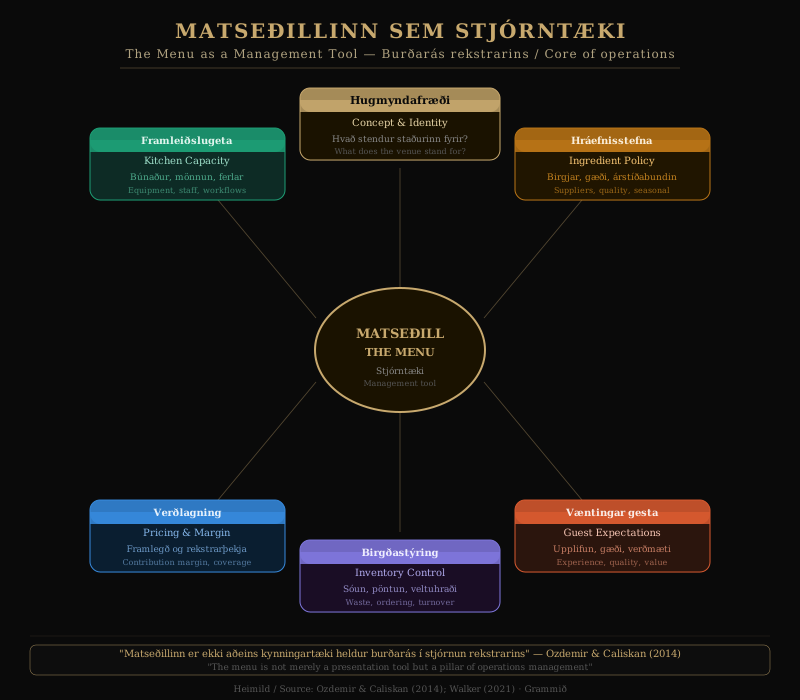
A review of the academic literature on menu management identifies menu planning, pricing, design, operation, and development as core managerial concerns. This demonstrates that the menu is not simply a promotional device, but a structural pillar of operational control. When developed professionally, the menu becomes a tool for aligning guest experience with financial and operational efficiency, rather than merely a list of dishes the restaurant would like to sell (Ozdemir & Caliskan, 2014).
Ingredients, suppliers, and operational reliability
Ingredient strategy must be aligned with the concept of the restaurant, its pricing policy, and its ability to maintain consistent quality. Ingredient selection must account not only for flavour and quality, but also for supply reliability, standardisation, yield, price fluctuations, and supplier collaboration. Supplier relationships are not merely technical components of restaurant management; they can also have important strategic implications. Research suggests that deliberate supplier selection and strong supplier partnerships can support both operational benefits and strategic performance, including improved efficiency, more stable quality, and greater competitiveness (Cho, Bonn, Giunipero, & Jaggi, 2021).
Likewise, the use of local and seasonal ingredients can strengthen the distinctiveness of a restaurant and create a stronger connection with its surrounding environment. Such a strategy may have positive effects on image, marketing, and guest perception, but it must also be operationally viable. Research on restaurant decisions to purchase local food shows that such decisions are shaped not only by values and branding considerations, but also by ordering systems, product availability, delivery capacity, and the organisation of the value chain (Sharma, Moon, & Strohbehn, 2014). Ingredient strategy must therefore always rest on a balance between values, quality, and operational practicality.
Financial planning and the operating model
A strong concept cannot become a sustainable business unless it is supported by a realistic financial plan. Start-up costs must be estimated, including interior fit-out, equipment, permits, consultancy, opening inventory, and training, as well as fixed and variable operating costs such as wages, rent, utilities, accounting, marketing, service fees, and maintenance. Such a plan must answer not only what the business will cost, but also how much revenue is required to cover those costs and generate an acceptable contribution margin. Business planning literature consistently stresses that financial projections must be grounded in realistic assumptions rather than optimism, especially in the case of new ventures (McKeever, 2019).
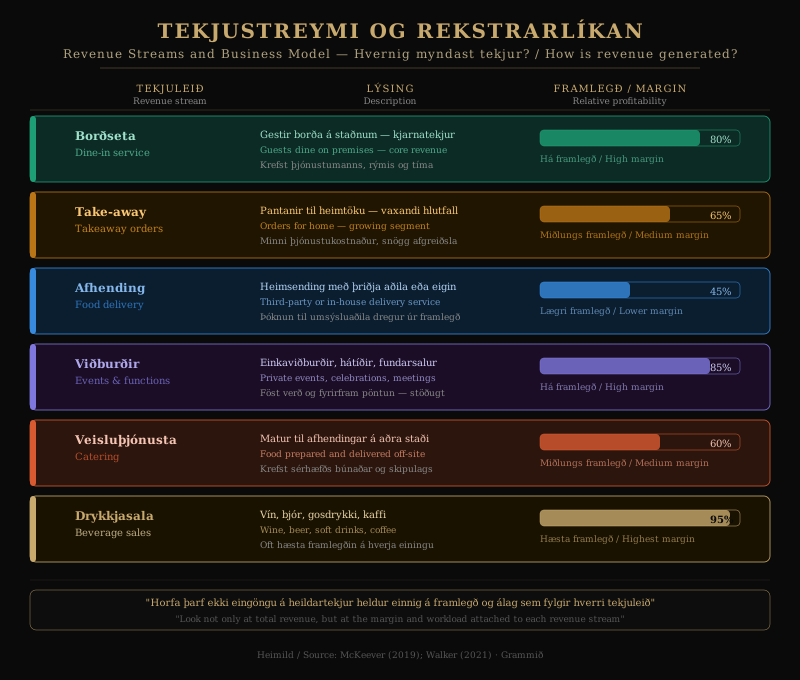
The operating model must also identify the restaurant’s main revenue streams. These may include dine-in sales, take-away, delivery, events, catering, beverage sales, or other forms of ancillary revenue. It is important to focus not only on total revenue, but also on the margin and workload associated with each stream. Some income sources may increase turnover without delivering proportionately strong returns, while others may be financially more attractive despite lower volume. Financial planning and the operating model must therefore be developed as an integrated whole.
The business plan as a roadmap
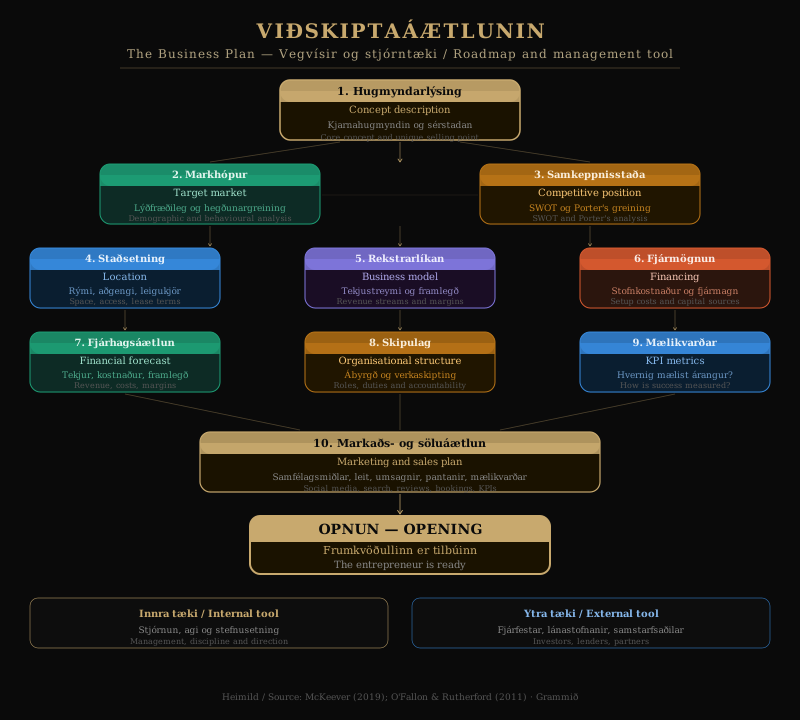
The business plan is a key document in restaurant development. It functions both as an internal management tool and as a presentation document for investors, lenders, and other stakeholders. A sound business plan should include a clear description of the concept, target market, competitive position, location, service style, operating model, organisational structure, financing, and performance indicators. It helps the operator test whether the concept remains coherent when translated into a structured document supported by operational and financial assumptions.
The business plan must also describe the organisation, areas of responsibility, and management structure of the business. In restaurant operations, where speed, pressure, and coordination are crucial, clarity in roles and responsibilities is fundamental. Accountability must be clearly established in the kitchen, service, purchasing, quality management, and finance. The business plan is therefore not only a tool for securing capital, but also a tool for creating discipline, direction, and clarity in the operation (McKeever, 2019; O’Fallon & Rutherford, 2011).
Sales and marketing planning
The sales and marketing plan must be closely connected to the core identity of the restaurant. Effective marketing is not a matter of advertising as much as possible, but of communicating clear and relevant messages to the right customers at the right time. For a restaurant, this may involve the coordinated use of social media, search visibility, a website, reservation and ordering systems, location-based information, review management, and targeted campaigns. In modern hospitality operations, digital touchpoints have become inseparable from the service process itself, and careful attention must therefore be paid to how the restaurant appears online before the guest ever visits in person.
A marketing plan must also include measurable indicators. These may include traffic, reservations, conversion rates, average spend, repeat visitation, and the performance of specific promotional channels. Without such measures, it becomes difficult to determine whether marketing activities are producing meaningful results or merely generating visibility without revenue. Marketing should therefore be treated as part of the overall management of the business rather than as a separate side function (Kotler & Keller, 2016).
From planning to opening
Once all the main elements have been defined, the final stage of preparation begins, in which strategy is translated into implementation. At this point, interior design, equipment, workflows, staffing, training, inventory control, the menu, pricing, marketing, and the opening plan all need to be coordinated. It is often at this stage that the quality of the preparatory work becomes most apparent. If the concept, target market, location, menu, and financial plan support one another, the opening process will be more focused and the operation more likely to reach stability. If these elements conflict, however, opening may become the beginning of a series of expensive adjustments.
Establishing a restaurant is therefore not a simple progression from idea to launch, but an integrated process of strategy and execution. It requires insight, professionalism, market awareness, and operational discipline. A good idea is important, but it is not enough on its own. To become a sustainable business, it must be able to function in financial terms, in workflows, in physical space, in human resource management, and in the guest experience. That is the difference between an appealing idea and a well-run restaurant.