Chapter 14 : Process Design and Service Flow
Process design and service design in restaurant operations
Process design in restaurant operations, often referred to as service process design, involves the systematic mapping and design of the entire process that the guest moves through, from arrival until the visit comes to an end. This does not refer only to the act of service itself, but to all the touchpoints that shape the guest experience and influence how the service is perceived, interpreted, and evaluated. Such an approach includes defining staff tasks, clarifying areas of responsibility, identifying where specialisation and coordination arise within the service chain, and ensuring that the flow of information between departments is clear and purposeful (Walker, 2021). The objective is to create continuity in service, maximise efficiency, and reduce the likelihood of inconsistency or error in service delivery (Johnston & Clark, 2008).
Within this work, key elements such as service structure, work processes, standard operating procedures, and service behaviours are defined with precision so that staff have clear guidance on how to respond to both routine situations and unexpected incidents (Shostack, 1984). This also means viewing service as an integrated whole in which visible and invisible activities support one another. This perspective is consistent with contemporary discussions of service design, where emphasis is placed on the overall experience, continuity across touchpoints, and a clear connection between processes, actors, and support systems. (interaction-design.org)
Touchpoints and the guest experience
Touchpoints are the moments at which the guest perceives and interprets the service, visually, aurally, and emotionally. In restaurant operations, the most important touchpoints can generally be divided into four main categories: the environment and physical appearance of the venue, personal interaction and staff behaviour, the delivery and flow of service, and finally the payment process.
Environmental factors such as cleanliness, lighting, interior design, and music create the first impression and shape guest expectations before direct interaction with staff begins (Bitner, 1992). Staff behaviour is equally important; a smile, intentional eye contact, and an active presence can increase both guest comfort and trust, and may influence the experience just as much as the food itself (Zeithaml & Bitner, 2003).
When it comes to order delivery and service, clear communication, timely execution, and strong coordination between the kitchen and the dining room are essential in avoiding delays, misunderstandings, and confusion that may reduce customer satisfaction (Johnston & Clark, 2008). Finally, the payment process carries particular significance because it shapes the guest’s last memory of the visit; speed, convenience, and reliability at this stage can strengthen the final positive impression and reduce the likelihood of negative feedback (Walker, 2021).
Service style and restaurant positioning
Service style, that is, how service is delivered and how formal the interactions are, shapes guest expectations and also reflects the culture, identity, and positioning of the restaurant. Different service models place different demands on organisation, staff behaviour, food presentation, and service speed. Contemporary writing on restaurant operations clearly distinguishes between different service formats, such as fine dining, casual dining, and quick service, each of which is built on different expectations regarding formality, speed, personal interaction, and overall experience. (pos.toasttab.com)
In a fine dining environment, the emphasis is on precise, structured, and formal service, where staff behaviour, timing, presentation, and the overall experience follow clearly defined standards. Such an experience is often based on multi-course meals, increased attention to detail, and service that is intended to feel both professional and refined (Johnston & Clark, 2008). In casual dining, the atmosphere is generally more relaxed and the service more personal, while still maintaining a professional foundation. In this context, the guest usually has greater freedom to choose combinations, additions, and the pace of the meal (Zeithaml & Bitner, 2003). (pos.toasttab.com)
In quick service environments, speed and efficiency are prioritised. Orders are simpler, the service process is shorter, and the service is usually designed to minimise waiting time as much as possible (Walker, 2021). In bistros, pubs, and bars, service often combines professionalism with personal interaction, placing emphasis on a lighter atmosphere, social closeness, and a warm manner (Bitner, 1992). (pos.toasttab.com)
Spatial layout and internal coordination
To support an efficient service process, a well-developed spatial foundation plan is required, enabling the operator to meet guest demand without unnecessary delays. The correct placement of the kitchen, beverage areas, reception, and service stations can reduce unnecessary staff movement, decrease overlap points, and contribute to a more organised and calmer operational flow (Johnston & Clark, 2008).
With clear signage, logical guidance, and purposeful spatial organisation, it is also possible to manage guest traffic flow more effectively, reduce the likelihood of disorder in table allocation, and improve the safety of both staff and guests. Furthermore, a clear separation of workstations, from receiving ingredients and kitchen preparation to invoice handling and payment processing, contributes to clearer responsibility, better information flow, and fewer mistakes in day-to-day operations (Shostack, 1984).
Visual representation of the service process
A visual representation of the service process, for example in the form of a flowchart or a service blueprint, is a useful management tool for analysing step by step how the service flows from the guest’s first reception until the visit is completed. In such a representation, attention is generally given to three main areas: interaction with the customer on the frontstage, staff interaction and service execution on the backstage, and finally support processes such as inventory management, reservation systems, and technical support, which sustain the service without necessarily being visible to the guest (Shostack, 1984). Current definitions of service blueprint place particular emphasis on distinguishing visible touchpoints, backstage activities, and support systems in order to identify bottlenecks, weaknesses, and opportunities for improvement. (interaction-design.org)
This type of overview helps staff understand their roles, identify potential thresholds or bottlenecks, and prepare purposeful responses when deviations occur in the service flow. Visual mapping is therefore not only a tool for analysis, but also a practical instrument for training, coordination, and continuous improvement in restaurant operations.
Service flowchart – process from guest arrival to departure
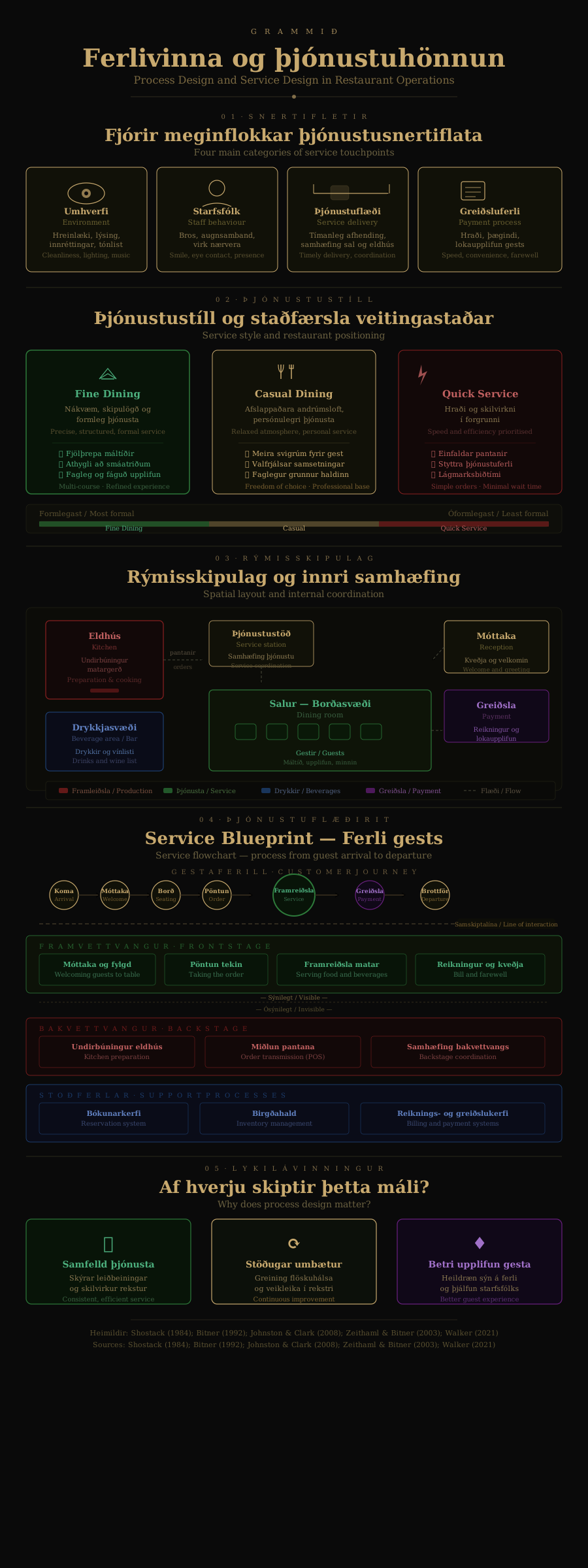
1. Customer actions
- Guest arrival
- Welcome and greeting
- Seating
- Ordering
- Service delivery
- Payment
- Departure
2. Line of interaction
- The boundary between what the guest sees and experiences directly and the internal processes that take place behind the scenes
3. Frontstage actions
- Receiving guests and escorting them to the table
- Taking the order
- Serving food and beverages
- Final interaction, bill presentation, and farewell
4. Backstage actions
- Preparation and food production in the kitchen
- Transmission of orders through the internal ordering system
- Coordination and operations behind the scenes
5. Support processes
- Table reservation system, bookings, and waiting lists
- Inventory management and stock control
- Billing and payment systems