GrammiðVefbók
GrammiðGrammið

© 2026 Grammið. Allur réttur áskilinn.

Introduction
Chapter 1 : Fundamentals of Restaurant Operations
Chapter 2 : Ingredients and Yield Loss
2.1 What is yield loss?2.2 Calculating yield loss2.3 True cost of ingredients2.4 Yield tables and systematic utilisation2.5 Food waste versus yield loss2.6 Yield loss as accountability2.7 Exercises and assignments2.8 References
Chapter 3 : Cost analysis and ingredient valuation
Chapter 4 : Inventory management
Chapter 5 : Technology, Automation, and Artificial Intelligence in Kitchen Operations
Chapter 6 : Pricing, Contribution Margin and Cost Control
Chapter 7 : Sales, Marketing and the Psychology of the Menu
Chapter 8 : Inventory Management, Internal Controls and Food Safety
Chapter 9: Standardisation and Description of Ingredients and Dishes
Chapter 10 : Service, service processes, and service quality Service as the foundation of the guest experience
Chapter 11 : Digital reviews and online visibility
Chapter 12 : From Concept to Operation
Chapter 13 : Operational Metrics and Performance Management
Chapter 14 : Process Design and Service Flow
Chapter 15 : The future of restaurant operations: challenges and opportunities
Chapter 16 : Glossary
Closing worda

2.3 True cost of ingredients

When calculating the true cost per kilogram, the purchase price is divided by the yield factor (100% minus the yield-loss percentage).

Example: If the kilogram price of meat is ISK 1,800 and yield loss during processing is 30% (yield factor 70%, or 0.70), the calculation is: ISK 1,800 / 0.70 = ISK 2,571 per usable kilogram.

If carrots cost ISK 120 per kilogram and yield loss is 15% (yield factor 85%, or 0.85), the true cost is ISK 120 / 0.85 = ISK 141 per kilogram.
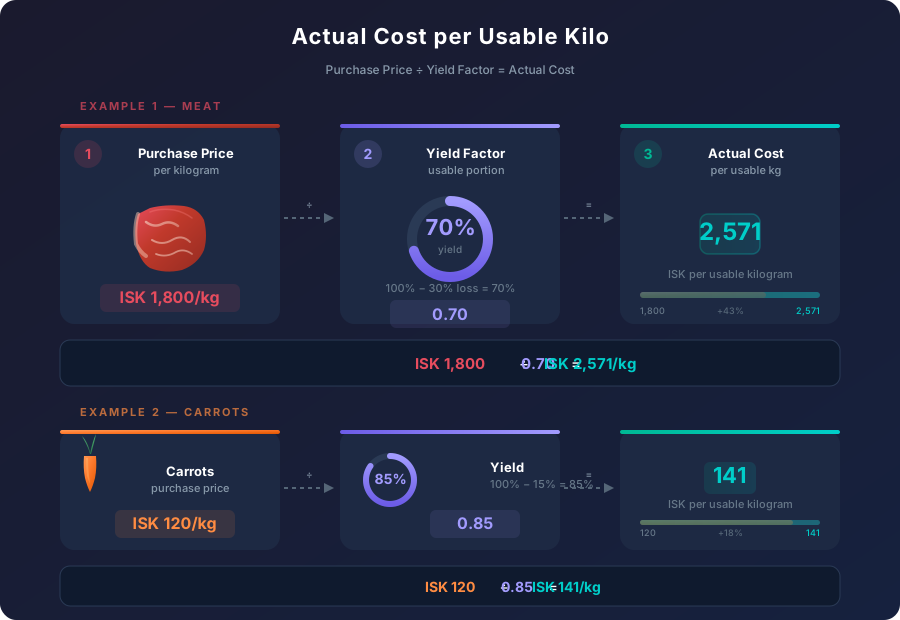
Actual cost

The #1 mistake when calculating food cost

Subscription Required

You need an active subscription to use this feature. Send us a message and we'll get you set up.

Request Access