6.5 Menu engineering matrix
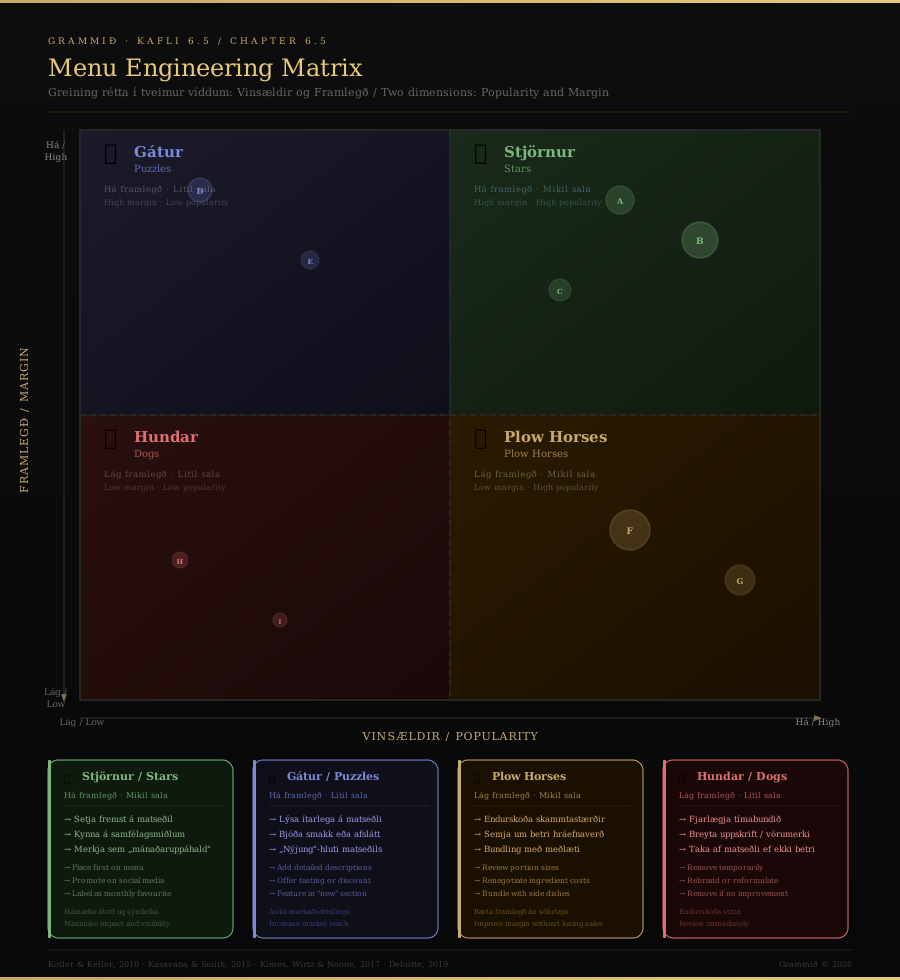
Menu Engineering is a data-driven methodology based on dish performance across two dimensions: popularity and gross margin. This analysis enables restaurant operators to define four categories of dishes and develop tailored strategies for each.
Stars are dishes with high margin and high sales volume. These dishes attract customer attention and generate strong profitability. To maximise their impact, it is recommended to place them prominently on the menu using photography or large typography, feature them as a monthly favourite or with a special marker, and promote them through targeted email and social media campaigns.
Puzzles are dishes with high margin but low sales volume. These dishes have strong profit potential but have not yet achieved sufficient market reach. To encourage higher sales it is helpful to describe the dish in detail, highlighting the characteristics and origin of its ingredients, offer a tasting portion or introductory discount, and place them in a dedicated new or featured section of the menu.
Plow Horses are dishes with high sales volume but low margin. These dishes are popular but generate limited profitability. To improve their position, operators can review presentation and portion sizes to reduce ingredient costs without diminishing the guest experience, renegotiate supply agreements or source more cost-effective local ingredients, and use bundling — selling the dish with a side — to increase the overall transaction value.
Dogs are dishes with low margin and low sales volume. These dishes reduce the overall performance of the menu and should be reviewed immediately. It is advisable to remove them temporarily to assess the impact on sales, rebrand or reformulate to increase their appeal, and in the worst cases remove them from the menu entirely.
To carry out Menu Engineering effectively, the following steps are recommended: collect real-time sales data from the POS system over a minimum of three months to capture seasonal fluctuations; calculate gross margin and profit ratio per dish; plot dishes on a grid where the x-axis represents popularity and the y-axis represents margin; develop actions for each category; and refresh data regularly — monthly reclassification is recommended — to maintain continuous optimisation.
The use of the Menu Engineering Matrix drives improved profitability across the entire menu by applying data literacy to decision making, reducing arbitrary pricing and ensuring consistency in menu marketing.
Subscription Required
You need an active subscription to use this feature. Send us a message and we'll get you set up.