6.6 Data Visualisation
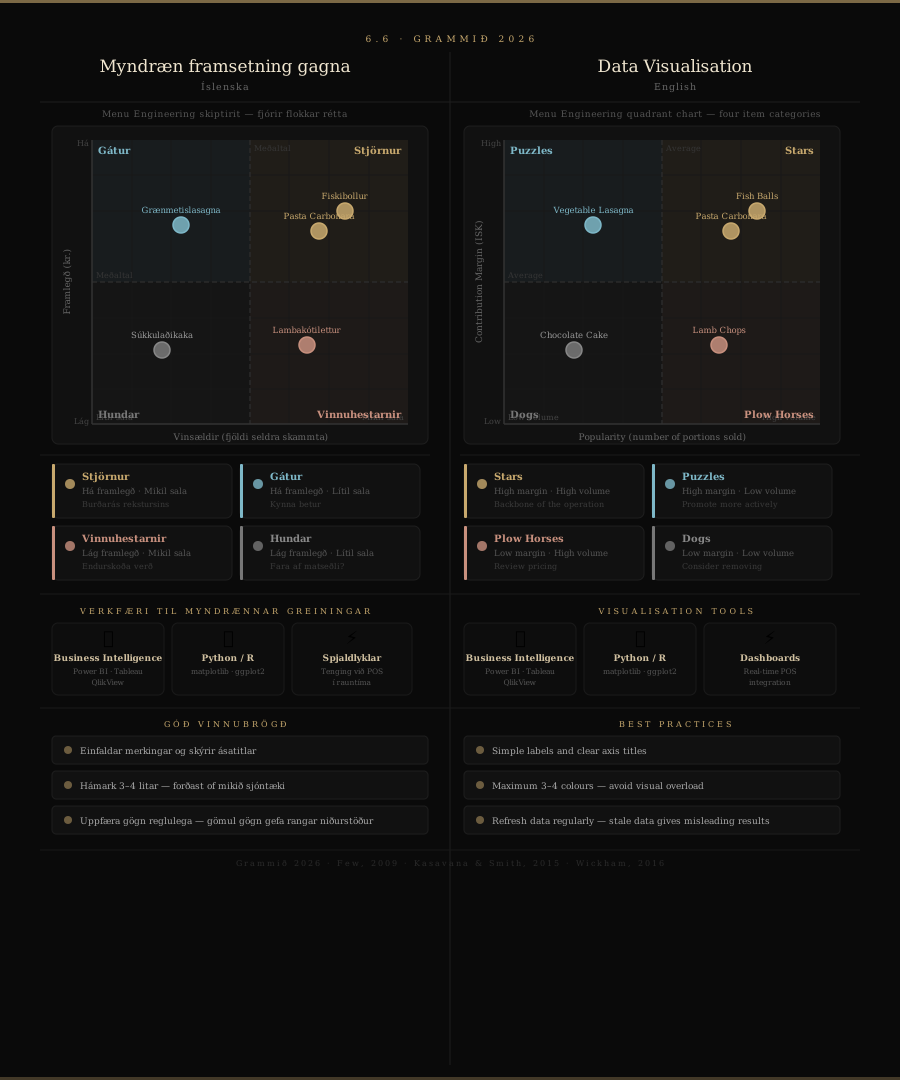
When data is complex and voluminous, a well-designed chart is often more powerful than a table. In menu engineering, the quadrant chart is one of the most effective tools available — it transforms raw numbers into a visual structure where the position of each dish on the chart tells its story at a glance.
How the chart works
The x-axis represents popularity — how many portions of a dish are sold. The y-axis represents contribution margin — the revenue remaining after variable costs are deducted. Where the two axes intersect (at the average of each) the chart divides into four quadrants:
- Stars (top right): High margin and high volume — the backbone of a profitable operation.
- Puzzles (top left): High margin but low volume — items with untapped potential that need better promotion.
- Plow Horses (bottom right): High volume but low margin — popular dishes that may need repricing or reformulation.
- Dogs (bottom left): Low volume and low margin — candidates for removal from the menu.
In the chart above, this plays out clearly: Pasta Carbonara and Fish Balls are strong Stars. Vegetable Lasagna is a Puzzle with potential. Lamb Chops are a Plow Horse requiring attention, and Chocolate Cake falls in the Dog quadrant.
Tools for building these charts
Three common approaches:
- Business Intelligence platforms such as Power BI, Tableau, or QlikView offer built-in quadrant charts with automatic updates as new data arrives.
- Python or R (via matplotlib or ggplot2) provide full control over colours, labels, and layout for custom presentations.
- Dashboards connected to the POS system update in real time, giving a continuous view of menu performance.
Best practices
Keep labels simple and axis titles clear. If colour is used, limit it to 3–4 distinct values to avoid visual overload. Most importantly, ensure data is refreshed regularly — a chart built on stale figures reflects the past, not the present reality of the operation.
Subscription Required
You need an active subscription to use this feature. Send us a message and we'll get you set up.