GrammiðVefbók
GrammiðGrammið

© 2026 Grammið. Allur réttur áskilinn.

Introduction
Chapter 1 : Fundamentals of Restaurant Operations
Chapter 2 : Ingredients and Yield Loss
Chapter 3 : Cost analysis and ingredient valuation
Chapter 4 : Inventory management
4.1 What is inventory management?4.2 Receiving and quality control4.3 The FIFO method and stock counts4.4 Impact on cost and operations4.5 The role of staff4.6 Exercises and Examples4.7 References
Chapter 5 : Technology, Automation, and Artificial Intelligence in Kitchen Operations
Chapter 6 : Pricing, Contribution Margin and Cost Control
Chapter 7 : Sales, Marketing and the Psychology of the Menu
Chapter 8 : Inventory Management, Internal Controls and Food Safety
Chapter 9: Standardisation and Description of Ingredients and Dishes
Chapter 10 : Service, service processes, and service quality Service as the foundation of the guest experience
Chapter 11 : Digital reviews and online visibility
Chapter 12 : From Concept to Operation
Chapter 13 : Operational Metrics and Performance Management
Chapter 14 : Process Design and Service Flow
Chapter 15 : The future of restaurant operations: challenges and opportunities
Chapter 16 : Glossary
Closing worda

4.4 Impact on cost and operations

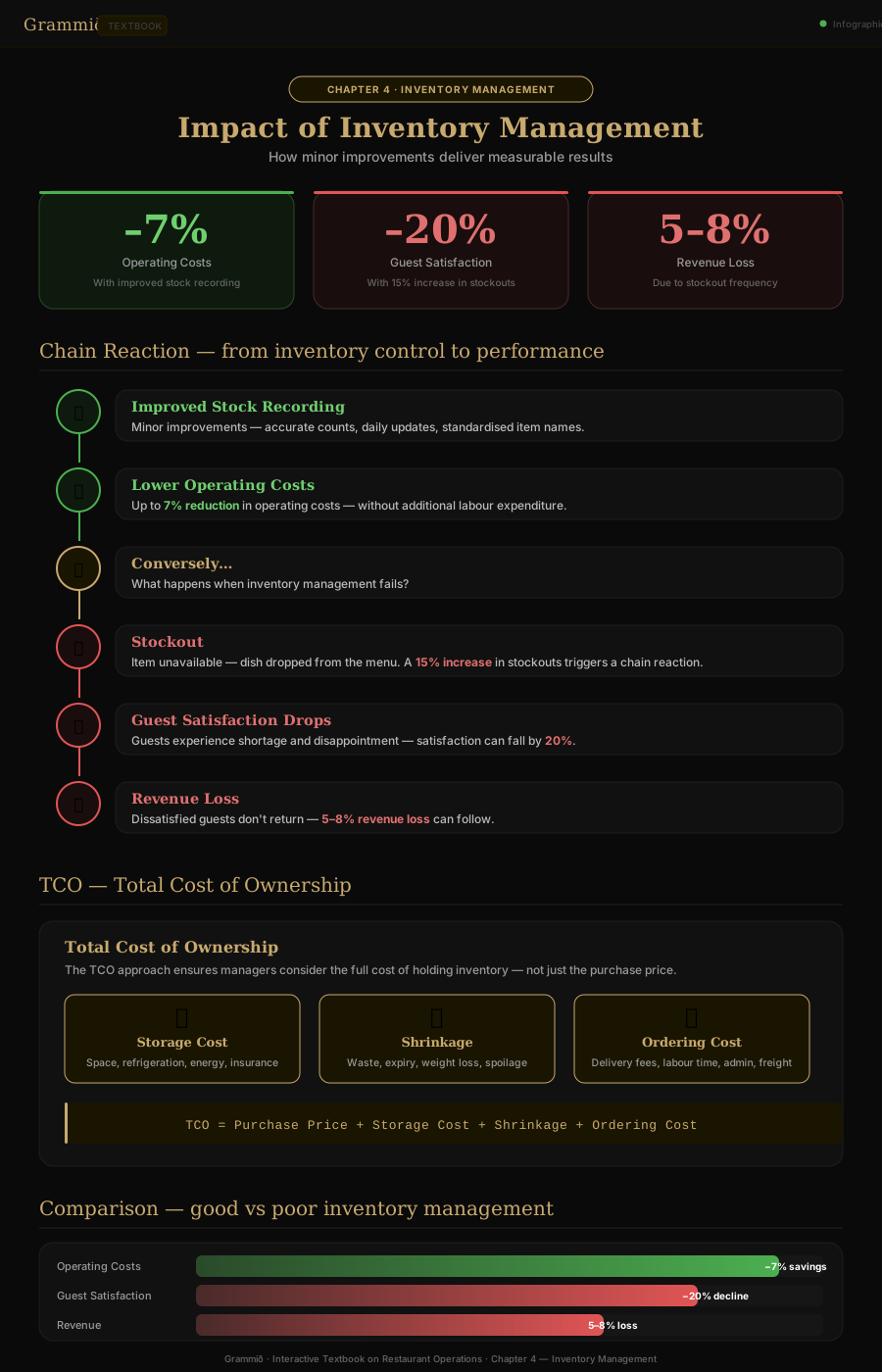
Effective inventory management has a direct impact on financial performance. Research shows that even minor improvements in stock recording at smaller restaurants can reduce operating costs by up to 7% without requiring additional labour expenditure.

Conversely, stockouts – when an item is unavailable – have serious consequences for service. It has been shown that a 15% increase in stockout frequency can reduce guest satisfaction by 20% and lead to a 5–8% loss of revenue. Applying a TCO approach (Total Cost of Ownership) ensures that managers consider the total cost of inventory holding (storage, shrinkage, ordering cost) rather than purchase price alone.

Usage vs. sales

Stop blaming low sales for your high food cost percentage
Inventori