7.1 The influence of the menu on purchasing behaviour
The menu is far more than a simple list of dishes.
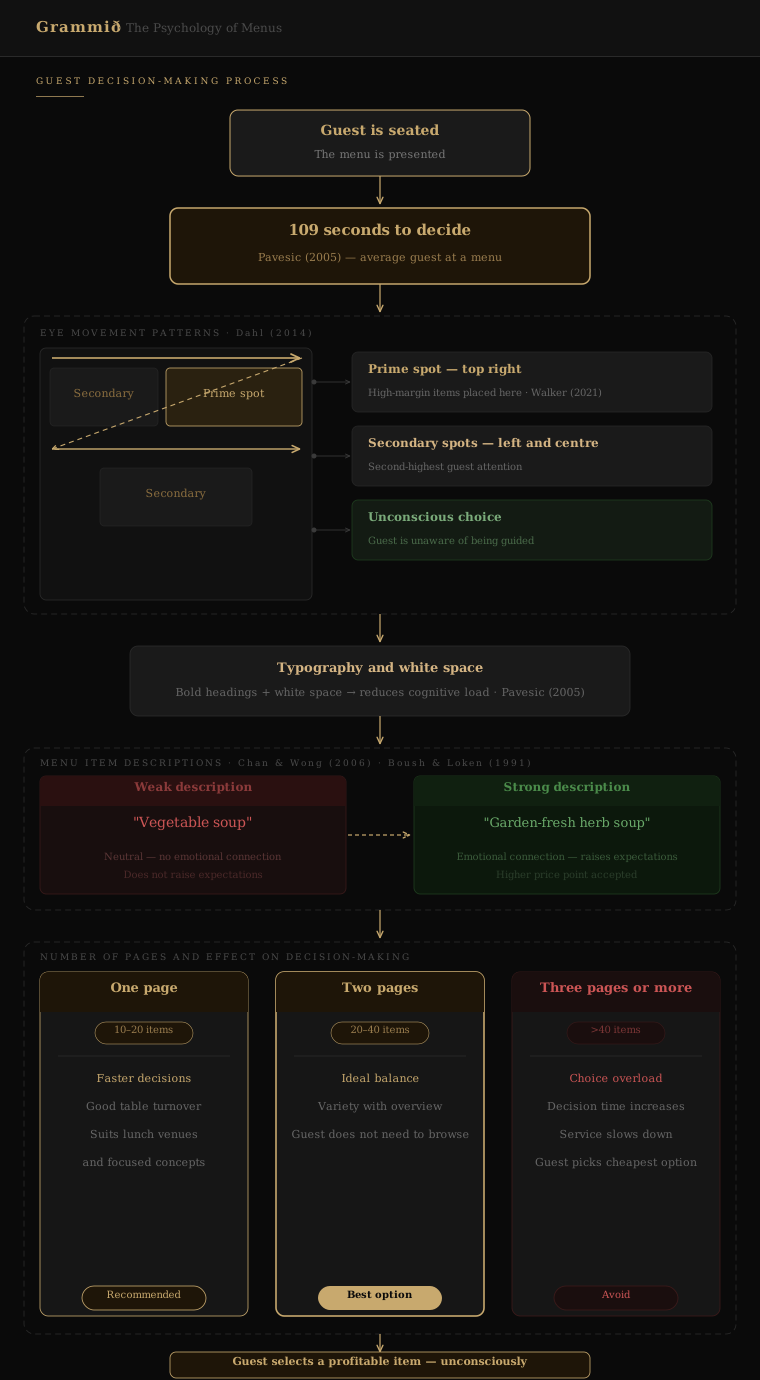
It is a key marketing tool that shapes guests’ perception and decision-making within a matter of seconds. Research by Pavesic (2005) shows that a guest spends, on average, only 109 seconds reviewing a menu before making a decision. During that time, the first impression of selection, price, and quality is formed, which makes visual layout and wording key factors in directing guests’ choices toward profitable dishes.
How many items should be on your menu?
The number of dishes and the overall length of the menu also have a direct effect on guest decision-making. A single-page menu with 10–20 dishes speeds up decision-making and table turnover, making it well suited to focused concepts and lunch restaurants.
A two-page menu with 20–40 dishes provide an optimal balance between variety and clarity.
When a menu extends to three pages or more and contains more than 40 dishes, the risk of choice overload increases. Decision time becomes longer, which slows service, and the guest will often end up choosing the cheapest or safest option.
The eyes generally follow a Z- or F-pattern when reading a menu. They begin at the top left, move to the right, then down and back to the left. The areas in the upper right corner (“primary sweet spot”), as well as the upper left corner and the center of the page (“secondary sweet spots”), are those that receive the greatest attention (Dahl, 2014). By placing high-contribution-margin dishes in these positions, a restaurant increases the likelihood that guests will choose them without this being obvious to them (Walker, 2021).
Typeface and spacing on the page also matter. By using bold or larger headings and sufficient white space, cognitive load is reduced and the elements the operator wants guests to notice first are reinforced (Pavesic, 2005). Descriptions of dishes then have a profound effect on imagination and perception. Instead of calling a dish vegetable soup, it is more effective to write
The very best from our garden in a delicate herb soup, which creates an emotional connection and heightens expectations (Chan & Wong, 2006; Boush & Loken, 1991).
To deepen participants’ understanding, here are direct links to videos that demonstrate visual design and psychological principles in practice:
Psychology of Restaurant Menu Design: Writing Menus That Sell https://www.youtube.com/watch?v=wgjio-oNY88
The Absurd Psychology of Restaurant Menus (TEDx)
https://www.youtube.com/watch?v=QIdmYijWhWQ
Top 5 Menu Psychology Techniques to Increase Sales! https://www.youtube.com/watch?v=rd1Un4AHHTI
Your playlist might be losing you thousands