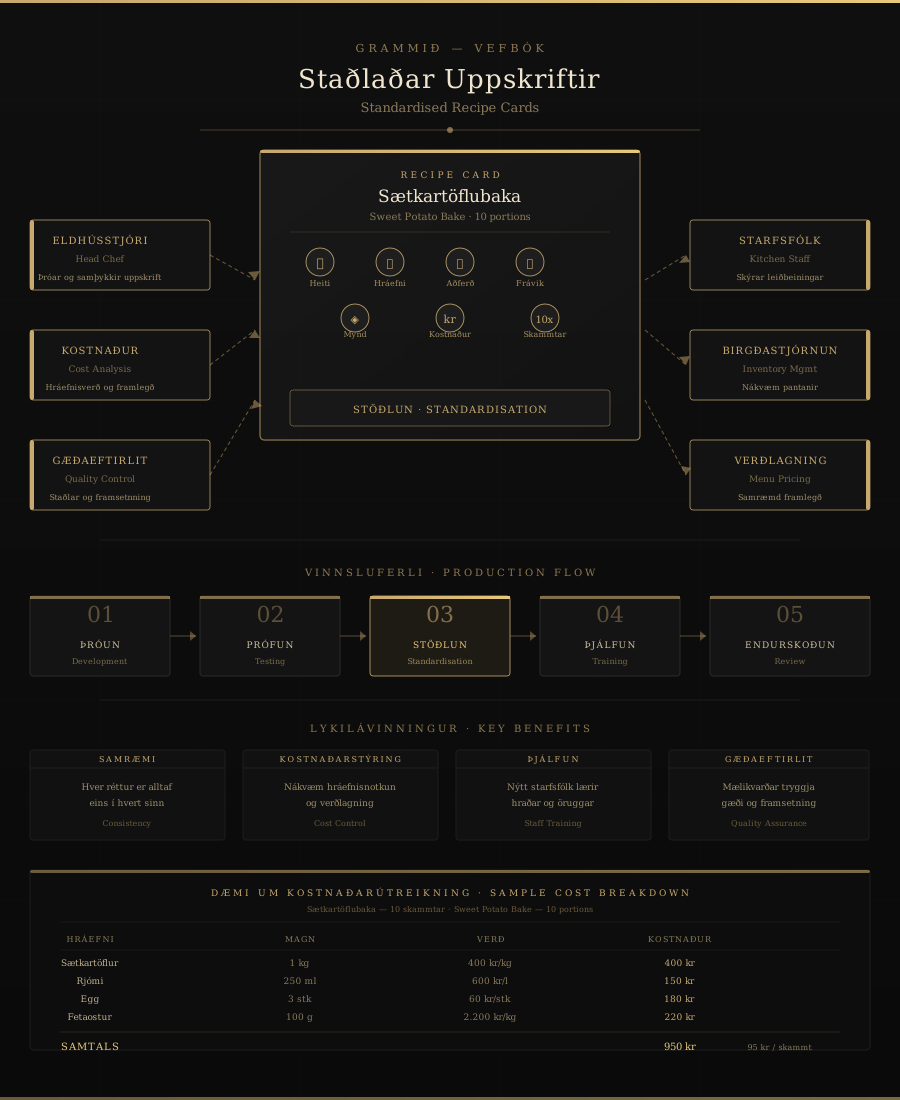
9.3 Structuring standardised recipes
Standardised recipes, or "recipe cards", serve as detailed instructions for each dish and ensure that production and presentation are always consistent (Arbuckle, 2021). Rather than brief bullet points, it is good practice to use a continuous narrative description that covers the purpose of the dish, ingredients, quantities, preparation process, and cost in a single text. The description begins by introducing the dish and its portions.
For example: The dish Sweet Potato Bake is designed for ten portions and aims to combine sweet potato and salty feta cheese in a soft, flavourful gratin.
Preparation begins by peeling and slicing one kilogram of sweet potatoes into slices approximately 1.5 centimetres thick, which ensures even cooking and a soft texture. The slices are arranged in an ovenproof dish and a mixture, made from 250 millilitres of cream and three eggs, is poured over until all slices are fully covered. Feta cheese, approximately 100 grams, is then crumbled on top and ten grams of dried thyme are scattered over, which both enhances colour and adds a fresh herbal flavour (Foskett & Paskins, 2016; Ninemeier, 2013).
The dish is baked at 180°C for thirty minutes until the surface has a golden crust. After baking, the dish is allowed to rest for five to ten minutes so that the juices settle and the slices hold their shape when cut (Walker & Miller, 2021). The costing department then uses the standardised recipe to calculate the total cost breakdown: potatoes (400 ISK/kg), cream (600 ISK/litre), eggs (60 ISK/unit) and feta cheese (2,200 ISK/kg), to ensure margin and consistent pricing (Apicbase, n.d.).
With this continuous layout for a standardised recipe, a balance is achieved between comprehensiveness and transferability — the kitchen's working methods are understandable to all, yet still dependent on precision and oversight. In this way the kitchen prepares the same dish to the same standard every time, and staff receive clear instructions for both training and inventory management.
Each recipe should include:
- Name of the dish
- Ingredient list and quantities
- Production process (method)
- Possible variations (e.g. for allergy warnings)
- Image or illustration of appearance and presentation
- Ingredient cost and portion size
Sample — recipe card: