GrammiðVefbók
GrammiðGrammið

© 2026 Grammið. Allur réttur áskilinn.

Introduction
Chapter 1 : Fundamentals of Restaurant Operations
Chapter 2 : Ingredients and Yield Loss
Chapter 3 : Cost analysis and ingredient valuation
3.1 Cost of goods sold (COGS)3.2 Contribution margin and mark-up3.3 Menu planning and guest behaviour3.4 Menu engineering : Star, Puzzle, Plow Horse, Dog3.5 Menu layout3.6 Exercises and assignments3.7 References
Chapter 4 : Inventory management
Chapter 5 : Technology, Automation, and Artificial Intelligence in Kitchen Operations
Chapter 6 : Pricing, Contribution Margin and Cost Control
Chapter 7 : Sales, Marketing and the Psychology of the Menu
Chapter 8 : Inventory Management, Internal Controls and Food Safety
Chapter 9: Standardisation and Description of Ingredients and Dishes
Chapter 10 : Service, service processes, and service quality Service as the foundation of the guest experience
Chapter 11 : Digital reviews and online visibility
Chapter 12 : From Concept to Operation
Chapter 13 : Operational Metrics and Performance Management
Chapter 14 : Process Design and Service Flow
Chapter 15 : The future of restaurant operations: challenges and opportunities
Chapter 16 : Glossary
Closing worda

3.1 Cost of goods sold (COGS)

Ingredient cost, commonly referred to as cost of goods sold (COGS), describes the direct cost incurred in the production of individual dishes. In foodservice, this cost is composed of the quantity and purchase price of ingredients, adjusted for yield loss.

To determine the true ingredient cost, it is necessary to calculate the true cost per gram or kilogram and multiply by the quantity required by the recipe. An understanding of COGS enables operators to identify the minimum selling price of a dish to cover direct costs, which is a prerequisite for achieving purchasing efficiencies and improving profitability.
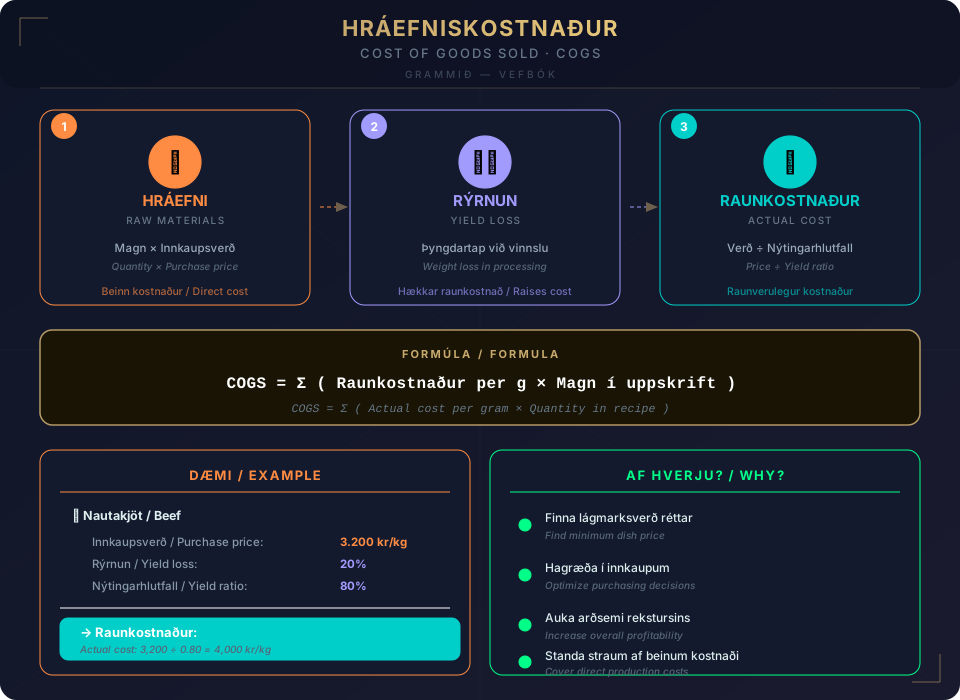
COGS

Want to know how to calculate your restaurant's food cost in 60 seconds?