GrammiðVefbók
GrammiðGrammið

© 2026 Grammið. Allur réttur áskilinn.

Introduction
Chapter 1 : Fundamentals of Restaurant Operations
Chapter 2 : Ingredients and Yield Loss
Chapter 3 : Cost analysis and ingredient valuation
3.1 Cost of goods sold (COGS)3.2 Contribution margin and mark-up3.3 Menu planning and guest behaviour3.4 Menu engineering : Star, Puzzle, Plow Horse, Dog3.5 Menu layout3.6 Exercises and assignments3.7 References
Chapter 4 : Inventory management
Chapter 5 : Technology, Automation, and Artificial Intelligence in Kitchen Operations
Chapter 6 : Pricing, Contribution Margin and Cost Control
Chapter 7 : Sales, Marketing and the Psychology of the Menu
Chapter 8 : Inventory Management, Internal Controls and Food Safety
Chapter 9: Standardisation and Description of Ingredients and Dishes
Chapter 10 : Service, service processes, and service quality Service as the foundation of the guest experience
Chapter 11 : Digital reviews and online visibility
Chapter 12 : From Concept to Operation
Chapter 13 : Operational Metrics and Performance Management
Chapter 14 : Process Design and Service Flow
Chapter 15 : The future of restaurant operations: challenges and opportunities
Chapter 16 : Glossary

3.5 Menu layout

The number of pages has a direct effect on the guest’s decision-making:

  1. One page: Provides a quick overview and speeds up the ordering process. Well suited to venues with a focused menu that want to avoid choice overload.
  2. Two pages: Offers a wider selection while maintaining an acceptable overview. Suitable for venues with a varied offering that want to keep ordering speed up.
  3. Three or more pages: Can lead to choice overload, which reduces the average order value and lengthens service time. It is important to weigh the layout against the target group.
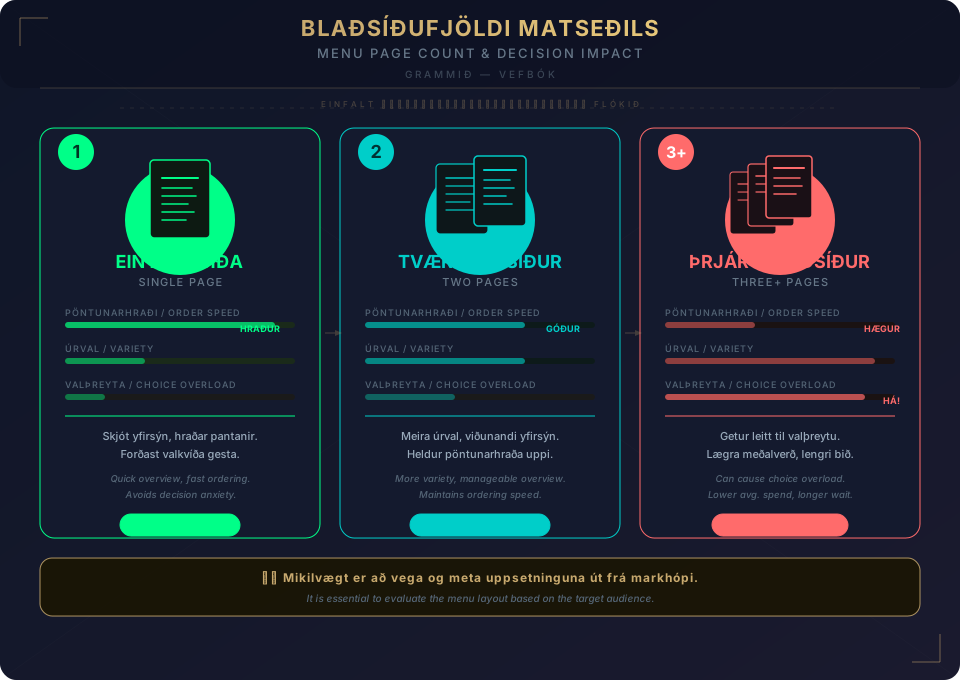
Menu page count